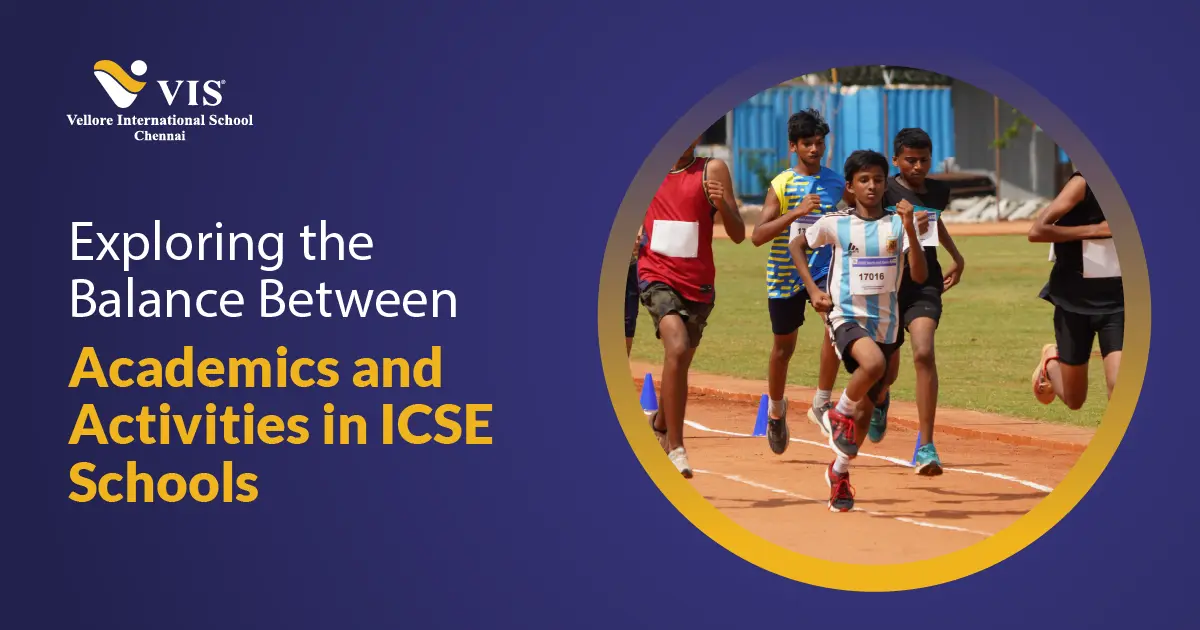
Balancing academics and activities in ICSE schools is extremely important. Not only do students get the opportunity to learn more, but they can also maintain their physical and mental well-being. Creating the right balance for an active student life in ICSE schools can be challenging, but the key is to practise time management, prioritise well, stay organised and disciplined, and maintain consistency. Keep going and believe in yourself!
Introduction
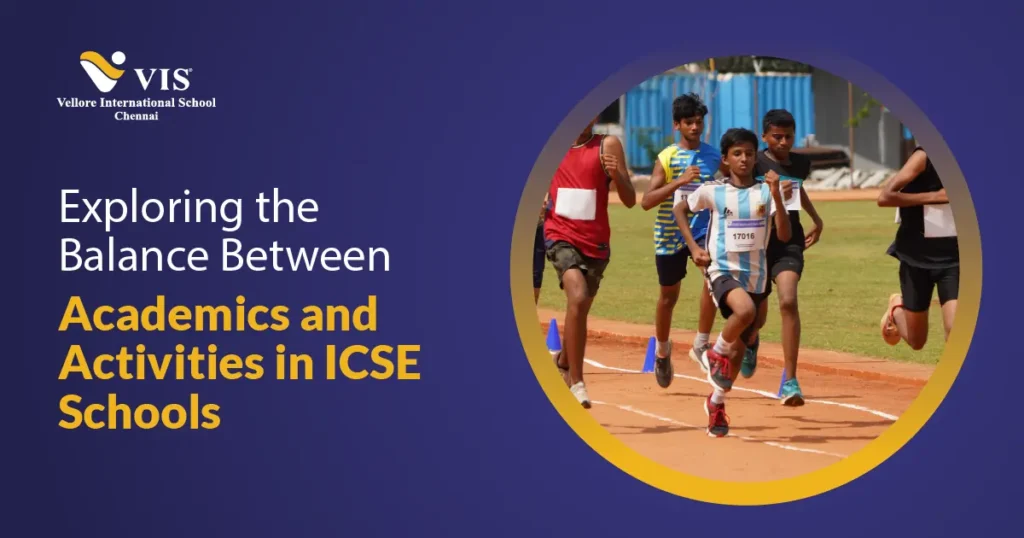
Student life in ICSE schools is much more than textbooks, timetables and exams. Between assignments and assessments, students are encouraged to explore sports, music, debates, clubs and a vast avenue of other activities that will help shape them into capable adults. Extracurricular activities imbibe confidence, self-esteem and balance to everyday growth and academic progress. And striking the right balance between the two helps students stay motivated and mentally refreshed. To know more about how this balance between academics and activities in ICSE schools works, continue reading our guide!
Why Are Extracurricular Activities Important?
Academics and exams are often at the top of the priority list of most parents and students alike. Of course, academics are extremely important. But what’s also equally important are extracurricular activities, sports and maintaining an active participation in events. If students are only studying, eventually they’ll suffer from burnout.
In fact, extracurricular activities are important for more than just maintaining good physical and mental health. The skills they impart are necessary for life. Real-world jobs are more than just learning and grades. They’re the active integration of several soft skills, life skills and technical knowledge. The education of these skills begins at the level of student life in ICSE schools. Students need to understand how social interaction works in the real world and learn communication to function and thrive ahead in their lives.
Here are a few more reasons why extracurriculars must be included along with academics.
- Beyond Academic Excellence: Being good in studies and achieving good grades is extremely important. However, being a well-rounded individual is more. Extracurricular activities allow students to grow and pursue interests outside the academic curriculum so they can realise and master their talents.
- Communication: Studying and excelling in exams is, ultimately, an individual activity. But to learn active communication and how to interact with their fellows, students must partake in other school activities, like group events, competitions, drama club, etc. These will help them take responsibility and also boost their self-esteem.
- Life Skills: Skills go beyond academic excellence. At the end of the day, ‘How to be a responsible citizen and take social responsibility?’ is a question best answered and mastered through co-curricular activities.
- Networking: Networking plays a huge role in the real world. Thus, students need to learn to make connections, build a community and make friends effortlessly.
- Health and Well-Being: Sports promote physical well-being, whereas events, projects and activities help in maintaining good mental health. These are important because, beyond academics, it’s essential to always stay on top of your health.
- Stress Relief and Coping Mechanism: As mentioned above, constant studying can lead students to burnout. To avoid that, they must have healthy ways to manage stress and develop useful coping mechanisms. Participating in art, music, or sports can help them channel their emotions and feelings productively. Moreover, these activities are great for maintaining mental health.
- Focus and Enhanced Concentration: When students are dividing their time between academics and activities in ICSE schools, they will eventually develop better discipline and enhanced focus that will allow them to perform even better in academics.
- Discovering Passions: Trying out new activities and participating in different events allows students to explore their passions, talents and interests. The exposure that extracurricular activities provide can help them hone their skills and broaden their horizons.
How Does The Curriculum Help With Managing Academics and Activities In ICSE Schools?
The curriculum is designed in a way to encourage students to explore extracurricular activities. Along with academics, several group projects, events, competitions, fairs, debates, clubs and activities are organised on a regular basis to encourage that. The final objective is to ensure that everyone gets to experience an active student life in ICSE schools. Ultimately, we understand that a good balance between academics and extracurricular activities is the best way to cultivate a lifelong love for learning and a curiosity for continuous exploration.
Tips To Balance Academics And Extracurriculars
Here are some of the best tips to balance both academics and activities in ICSE schools.
#1 Time and Priority Management
In order to balance both academics and activities, students must learn time management and prioritisation. It will certainly work differently for different people, but it’s essential to keep exploring tricks and techniques until you find the one that works for you.
#2 Weekly Calendar
It’s always wise to plan ahead. Sometimes, when there’s too much on the plate, setting a rigid schedule is difficult. What you can do instead is plan weekly calendars and schedules. Set aside time for studies, hobbies, activities and relaxation in an ordered way.
#3 Decide Well
If you have less time at hand, decide which co-curricular activities you want to opt for. Consider your interests and talents before making the pick. If you end up choosing something that doesn’t align with what you like, just because your friends do or your mentors told you to, you’ll end up hating the very activity you picked to relax and rejuvenate with.
#4 Saying No
“Time will always be your biggest constraint” needs to be emphasised again. You cannot do everything at the same time. Along with academics, sports, hobbies and co-curriculars, you’ll likely have very little time left at the end of the week. Hence, it’s essential that you learn to say no to a few things and prioritise accordingly.
#5 Be Organised
If you have a schedule or have created a weekly calendar, you must now stay consistent and be completely organised. Don’t let your habits be all over the place. Balancing academics and activities in ICSE schools is a challenge, and being disciplined plays a big role in achieving it.
#6 Physical and Mental Health
The key objective of having an active student life in ICSE schools is to ensure you focus on your physical and mental health. Jabbing into new areas of learning and exciting events is a way to maintain your mental health and keep you in good spirits. Thus, it should never be achieved at the expense of your health. Don’t overexert yourself and end up suffering from burnout!
#7 Don’t Hesitate To Ask For Help
Parents, teachers and facilitators are there to help you. Their guidance will assist you in handling both academics and extracurricular activities. You don’t need to do everything alone; find help and get it done more easily together with your community of friends, parents, and guides.
#8 Don’t Compromise Studies
Extracurricular activities are extremely important, but not at the cost of your studies or grades. Ultimately, you’ll need a good academic performance for future admissions and building a good career. Thus, it’s important to strike a balance between both, not favour either.
#9 Don’t Limit Yourself
Reading this guide and our tips for maintaining a good student life in ICSE schools can feel slightly overwhelming. If you’re concerned about how you’re going to balance both, don’t underestimate yourself. A little practice and discipline can go a long way. Don’t limit yourself to a few things or stop yourself from trying because of the fear of failure.
Vellore International School: A Hub For All-Round Development
We, at VIS Chennai, understand the importance of life beyond academics – not only from the perspective of healthy development, but also because of the values and skills it imparts. As a boarding school, we ensure that students get the rightful opportunity to delve into their interests and explore different avenues.
Similarly, education beyond a classroom includes field trips, student excursions and practical experiences – all of which are equally emphasised here at VIS.
Learn more about their hidden benefits here: Hidden Benefits of School Excursions and Field Trips.
Final Thoughts
There’s no doubt that it’s essential for students to explore other activities beyond studies. And more importantly, maintaining a balance between academics and activities in ICSE schools. Students must not give priority to either one and excel at the cost of the other. To manage both, students need to learn time management, prioritisation, drawing up schedules, maintaining consistency, exercising discipline, and exploring as much as possible. It might be difficult to get a grasp on all this immediately, in which case it’s important to keep trying and get help from parents, teachers and friends.
FAQs
Q1. How to balance between academics and extracurricular activities?
Ans: To balance academics and activities in ICSE schools, create a realistic timetable, prioritise your activities, say no to what doesn’t fall into your list, and be consistent.
Q2. What is the relationship between extracurricular activities and academic performance?
Ans: Multiple surveys and research show that students who are involved in extracurricular activities perform better in academics. They enable reduced absenteeism, higher aspirations, and improved grades.
Q3. What is the link between exercise and academic performance?
Ans: Optimal physical fitness allows students to concentrate on their studies without any hurdles. Moreover, regular exercise increases cognitive skills and attention span and keeps them on their toes, ready for any challenge.
Q4. How can physical activities improve your academic performance?
Ans: Physical activity and regular exercise increase oxygen flow, the presence of neurotransmitters, and neurotrophins that support better learning, higher thinking and faster memory.
Q5. What types of activity boost learning?
Ans: Students can explore art, music, dancing, robotics, nature exploration, debates, events, science fairs, competitions, drama club, sports and other similar activities to boost learning.