Choosing the right curriculum is one of the most important academic decisions parents and students make today. In a world where education is global, competitive, and skills driven, the curriculum a student follows plays a role in shaping university opportunities and career pathways.
Among the many international education frameworks available, the Cambridge curriculum has earned a strong reputation for academic excellence and global recognition. This blog explains how the Cambridge Curriculum prepares students for admission to top global universities.
Understanding the Cambridge Curriculum
The Cambridge curriculum, developed by Cambridge Assessment International Education, is designed to be flexible, challenging, and globally relevant. It focuses on depth of understanding rather than rote memorisation, encouraging students to question, analyse and apply knowledge.
One of the most significant Cambridge curriculum benefits is its structured progression from primary through secondary and pre-university levels, ensuring continuity and academic coherence. The Cambridge curriculum focuses on conceptual clarity and practical application.
Students are not just taught what to learn but how to learn, an essential foundation for higher education. Universities worldwide recognise this approach, as it mirrors the independent and research learning style expected at the undergraduate level.
How Cambridge Curriculum Prepares Students for Top Global Universities
1) Global Recognition by Top Universities
One of the strongest reasons parents opt for the Cambridge pathway is its acceptance by leading universities across the UK, USA, Canada, Europe, Australia, and Asia. Institutions such as Oxford, Cambridge, Harvard, MIT and Stanford value Cambridge qualifications for their academic rigour and assessment quality.
Among the most impactful Cambridge curriculum benefits is this universal recognition, which gives students an advantage during international admissions. Admissions officers are familiar with Cambridge grading standards, syllabi depth, and assessment patterns.
This familiarity builds trust in a student’s academic preparedness and reduces uncertainty during evaluation. As a result, Cambridge students often find smoother transitions into global universities.
2) Strong Foundation in Core Academic Subjects
The Cambridge curriculum offers a strong academic foundation across Mathematics, Sciences, Languages, and Humanities. Subjects are designed to build logical reasoning, analytical ability, and conceptual understanding from an early age.
Another important aspect of the Cambridge curriculum benefits is the balance between theoretical knowledge and practical application, especially in science and maths. Laboratory work, experiments and data interpretation form a regular part of the learning experience.
This exposure aligns closely with the academic expectations of science, engineering, medical, and research university programs.
3) Focus on Critical Thinking and Problem Solving
Top global universities consistently focus on critical thinking as a core skill for student success. The Cambridge curriculum is intentionally designed to cultivate this ability through open ended questions, case studies, discussions, and analytical assessments.
One of the most valued Cambridge curriculum benefits is the way students learn to approach problems from multiple perspectives rather than seeking one “correct” answer. This method trains students to evaluate evidence, justify arguments, and develop original viewpoints.
4) Research Learning Approach
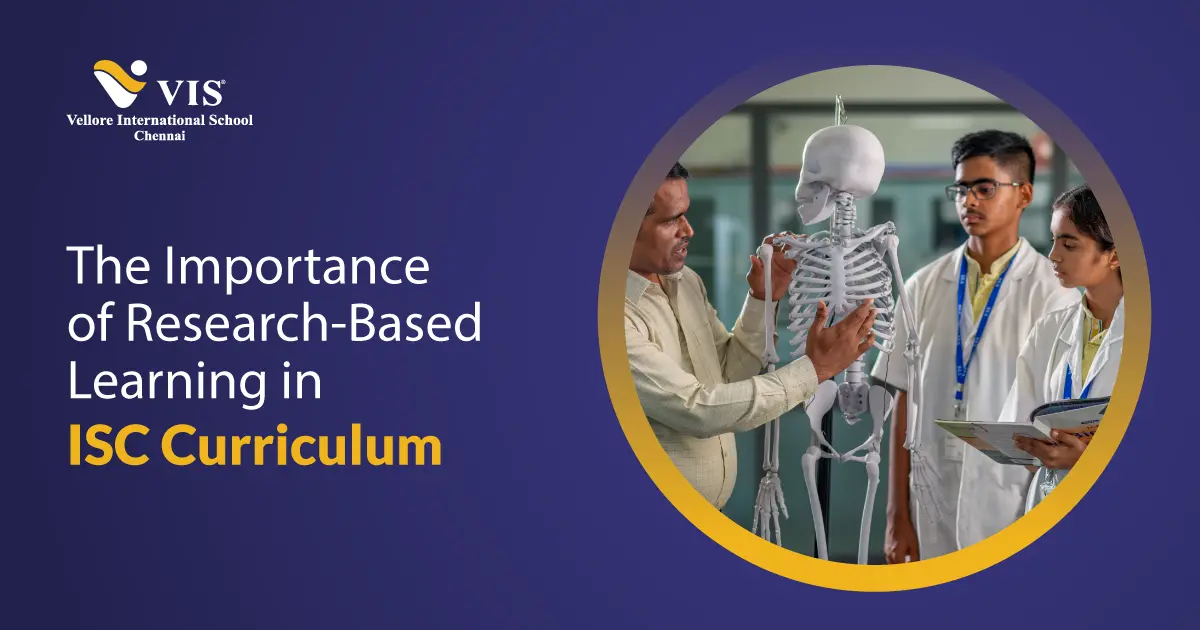
Research learning is deeply embedded in the Cambridge framework. Students are encouraged to explore topics, conduct investigations, and present findings in structured formats. Among the standout Cambridge curriculum benefits are early exposure to research methodologies, academic writing, and referencing.
By the time students enter university, they are already familiar with research papers, extended responses, and project evaluations. This familiarity reduces academic pressure during the first year of university and allows students to focus on deeper learning.
5) Development of Independent Learners
University success requires a high level of self-discipline, time management, and independent study habits. The Cambridge curriculum gradually shifts responsibility from teacher instruction to student learning.
One of the key Cambridge curriculum benefits is this structured independence, which prepares students for lecture based learning environments and self-guided coursework. Students learn how to plan studies, manage deadlines, revise strategically, and reflect on feedback.
6) Assessment Methods Aligned with University Standards
Cambridge assessments are designed to evaluate understanding, application, and analysis rather than memory recall. Exams often include structured questions, data-based analysis, and extended responses.
Among the Cambridge curriculum benefits is that students become comfortable with exam formats similar to those used in universities. This assessment style reduces exam anxiety and builds confidence as students are trained to articulate ideas clearly and manage time effectively.
7) Concentration on Communication and Language Proficiency
Strong communication skills are critical for global academic environments. The Cambridge curriculum places a strong focus on English language proficiency, presentation skills, and academic writing.
Another vital element of the Cambridge curriculum benefits is the development of clear, confident communicators who can express ideas effectively in both written and spoken formats. This is valuable for students applying to international universities where essays, interviews, group discussions, and presentations are part of the admissions and learning process.
8) Holistic Skill Development Beyond Academics
While academic excellence is central, the Cambridge curriculum also nurtures creativity, collaboration, leadership, and emotional intelligence. Group projects, discussions, and interdisciplinary learning encourage teamwork and empathy.
One of the less obvious but equally important Cambridge curriculum benefits is the development of competent individuals. Top universities look for students who can contribute meaningfully to campus life, engage in extracurricular activities, and demonstrate leadership potential.
9) Preparation for Competitive University Admissions
Admissions to top global universities are highly competitive and holistic. Academic performance, personal statements, recommendations, interviews, and extracurricular involvement all play a role.
Among the strategic Cambridge curriculum benefits is how well it prepares students to excel across all these dimensions. Cambridge students are trained to reflect on their learning journey, articulate goals, and showcase achievements authentically.
10) Smooth Transition to International Education Systems
Many students struggle during their transition from school to university due to differences in teaching methods and academic expectations. One of the most reassuring Cambridge curriculum benefits is how closely it aligns with international education systems.
Students entering universities abroad often report feeling academically confident and proficient, thanks to their prior exposure to independent learning and analytical assessments.
Role of Teachers and Academic Mentorship
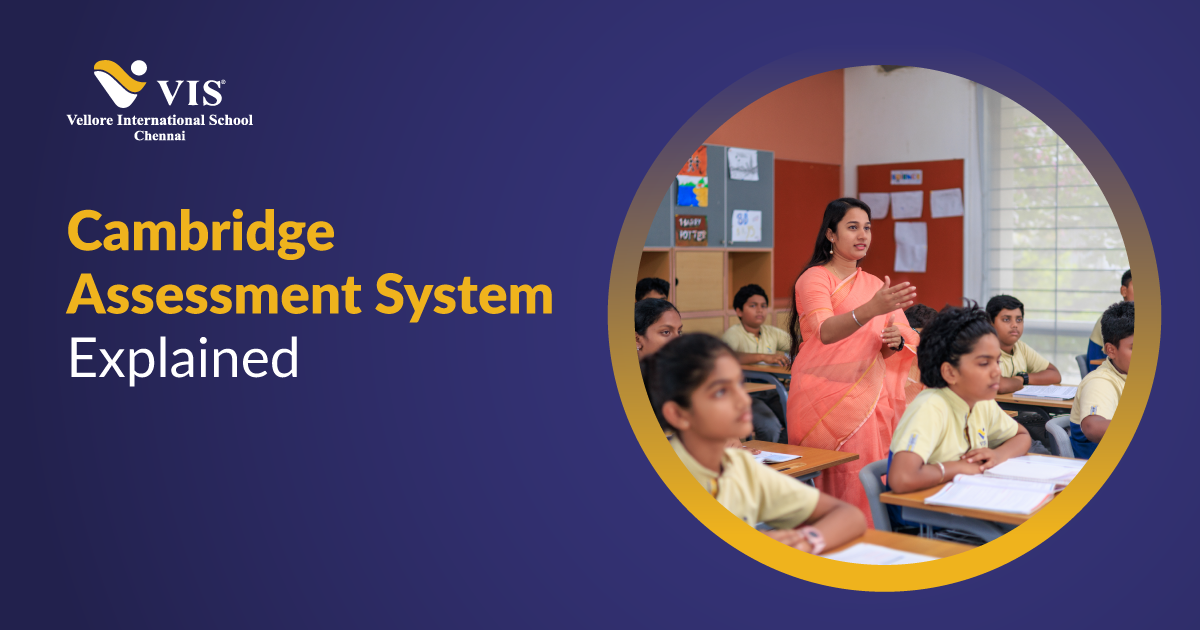
A curriculum is only as effective as its delivery. Teachers should guide their students through academic challenges, career exploration, and university preparation. This mentorship helps students identify strengths, improve weaknesses, and align academic choices with long term goals.
Cambridge Curriculum at Vellore International School
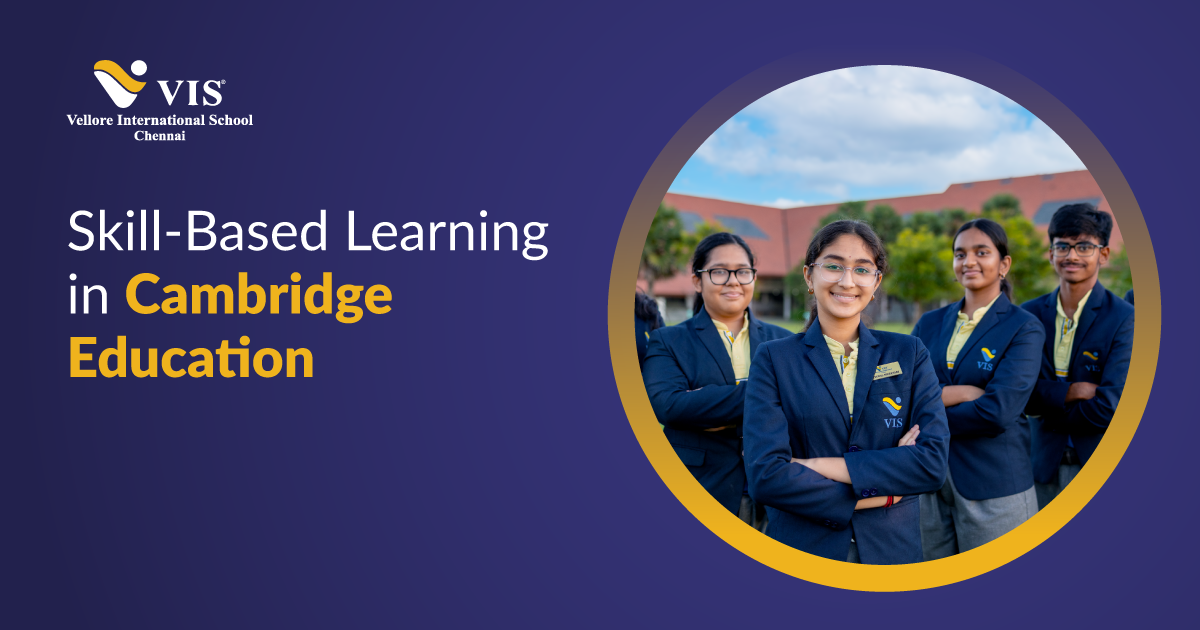
At Vellore International School, the Cambridge curriculum is delivered with a strong focus on academic excellence, global exposure, and student centric learning. Our school integrates international standards with personalised guidance.
Teachers at Vellore International School focus on conceptual understanding, continuous assessment, and skill based learning. Students are encouraged to ask questions, explore interests, and develop confidence. This approach ensures that learners are future ready.
Final Thoughts: A Strong Pathway to Global Success
Preparing students for top global universities requires a mindset of inquiry, independence, and excellence. The Cambridge curriculum offers a detailed, internationally respected framework that aligns seamlessly with university expectations.
The Cambridge curriculum benefits are evident in student confidence, academic performance, and global acceptance. At Vellore International School, these benefits are amplified through dedicated teaching, personalised mentorship, and a commitment to holistic development.
By choosing this pathway, students are preparing for global success. The Cambridge curriculum benefits ensure that learners step into the world’s leading universities ready to excel, adapt, and lead.
FAQs
1. How does the Cambridge curriculum help students get into top global universities?
The Cambridge curriculum helps students gain admission to top global universities by focusing on critical thinking, research-based learning, and conceptual understanding. Universities value Cambridge students because they are trained to analyse, question, and apply knowledge.
2. Is the Cambridge curriculum better than other international curricula for university preparation?
The Cambridge curriculum is considered highly effective for university preparation because of its globally recognised assessments, flexible subject choices, and emphasis on independent learning. It prepares students academically and mentally for the transition to higher education.
3. What skills do students gain from the Cambridge curriculum that universities look for?
Students studying the Cambridge curriculum develop critical thinking, problem solving, research skills, communication abilities, and academic writing proficiency. These skills are essential for success in global universities, where independent study, presentations, research projects, and analytical assessments are a core part of learning.
4. Are Cambridge curriculum students well-prepared for studying abroad?
Yes, Cambridge curriculum students are well-prepared for studying abroad because the curriculum follows international academic standards and assessment styles. Students are familiar with exam formats, research work, and independent learning.
5. Why should parents choose the Cambridge curriculum at Vellore International School?
Parents should choose the Cambridge curriculum at Vellore International School because it combines international academic standards with personalised guidance and development. The school focuses on nurturing independent learners, strong communicators, and confident global citizens.