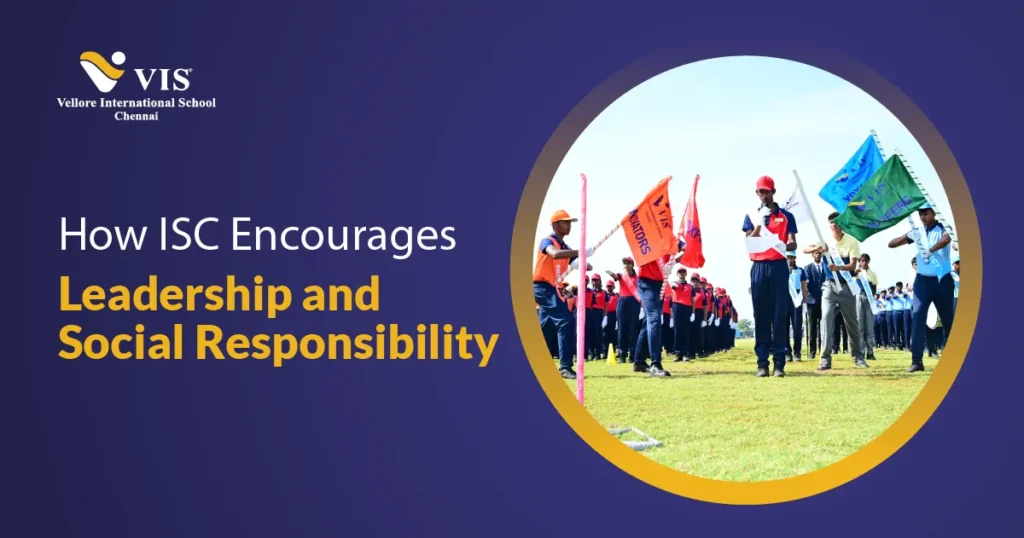
In the present-day work environment, responsibility and leadership are absolutely crucial. Teaching students how to practise these naturally can be challenging, but it doesn’t have to be with the ISC curriculum. Team building and leadership in ISC schools start with project-based learning for a range of subjects, active communication, student councils, sports events, classroom leadership, and group projects. Moreover, social responsibility is also given equal importance in ISC schools. Students are taught to behave compassionately, take more accountability, exercise empathy and learn what makes a good citizen.
Introduction
Academics and exams often receive the most attention from both students and parents. However, moulding a smart citizen who understands how to complete their responsibilities involves more than that. To excel in their careers, students must learn collaboration and leadership, along with their social duties. Because of this, leadership in ISC schools is a huge area of focus that is imbued and taught to students. Similarly, social responsibility in ISC schools is also practised via a range of activities. To learn more about how these life skills are integrated into the curriculum, continue reading!
How Does The ISC Curriculum Work?
Conducted by the Council for the Indian School Certificate Examinations (CISCE), the ISC is a national-level examination for 12th-grade students. It pertains to a two-year programme including classes 11 and 12, after which students can write the exam to get their Indian School Certificate (ISC) qualifications.
It is a rigorous programme with a wide and in-depth syllabus that focuses on the all-round development of students. It is designed to make students capable of competing globally for their higher education.
Why Is Leadership Important In Today’s World?
Excellence in academics is more than scoring well in exams and achieving the top grade. It refers to the complete development of character and holistic learning. A huge part of that is social skills, teamwork, and leadership. Employers look for these soft skills just as much as they consider the knowledge and academic strength of their candidates.
More importantly, leadership skills are crucial because, beyond entry-level jobs, candidates will need to take on more responsibility and accountability for their work, lead teams, manage resources and demonstrate their abilities to guide their teams. Even running a business requires a range of skills to collaborate with multiple teams, lead them to achieve the business objectives, and maintain a clarity of mind. Students today are working towards jobs of the future, a lot of which don’t even exist today. Preparing for them means expanding your boundaries of prep from academics to other life skills. And all of this begins not after academic life, but along with it.
How Does ISC Facilitate Leadership And Social Responsibility?
The ISC curriculum, as mentioned above, puts special emphasis on the overall development of students, and not just academics. A lot of extracurricular and co-curricular activities are designed while keeping this in mind. Here are some aspects that support and encourage leadership in ISC schools:
#1 Project-Based Learning
Along with theoretical subjects and concept-based learning, ISC focuses on practical learning as well. Projects and assignments like these enable students to work together, master practical application and focus on collaboration. This also encourages team building in ISC schools.
#2 Range of Subjects
Students can choose from a wide range of subjects at ISC schools. This allows them to explore their interests, gaining the opportunity to learn more than what a rigid curriculum would allow. After all, wise social responsibility begins with vast knowledge and the willingness to be open-minded.
#3 Communication
A good leader, before all else, is a good communicator. Even when looking at the larger picture, it’s essential to exercise good communication when working with international teams, collaborating globally, and excelling beyond entry-level jobs. Thus, a big part of leading and team building in ISC schools is ensuring students learn active and healthy communication.
#4 Elections and Student Councils
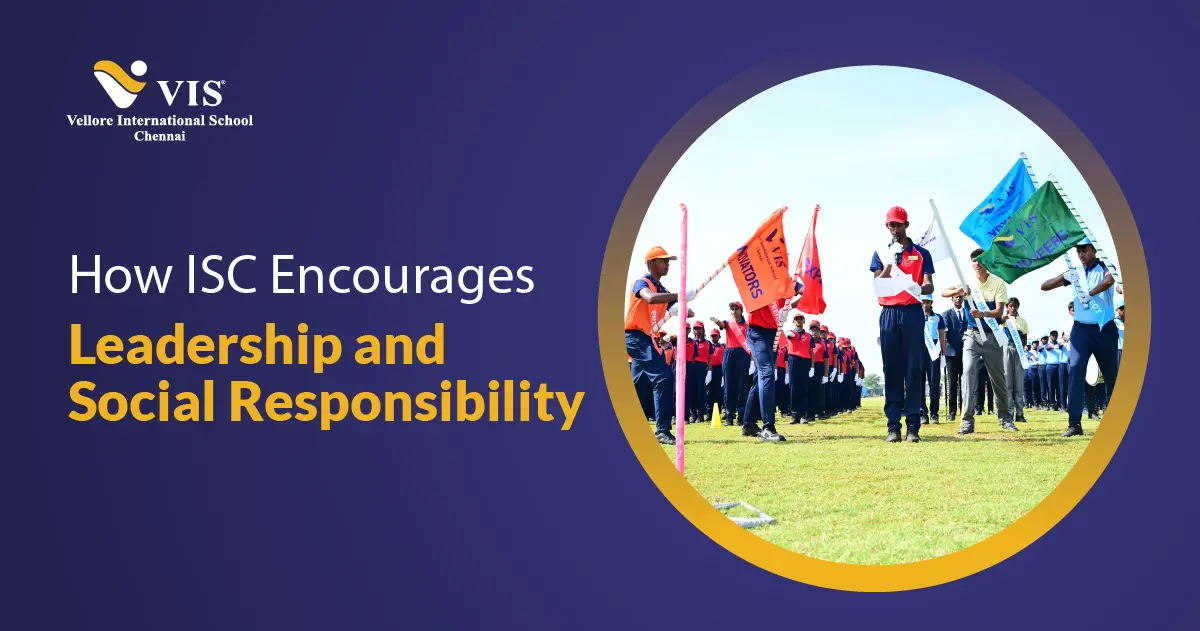
Leadership in ISC schools is facilitated by student councils. The campaigns, debates, and speeches give students a chance to learn how to present their thoughts and take charge. Moreover, these student elections are a way to understand and experience how leadership works, resolve conflicts, and deal with negotiation.
#5 Classroom Leadership
Small leadership roles like group leaders, activity coordinators, and debate keep passing between students, so everyone gets a chance to learn and exercise their skills. This not only encourages participation but also builds confidence.
#6 Interhouse Competitions
Starting from academic competitions to sports, performing arts, literary contests, and so on, ISC schools conduct these interhouse competitions to imbibe more confidence in students when it comes to competition and strategising.
#7 Group projects
Group projects are a great way to teach students how to collaborate, work together as a unit rather than towards individual goals, and learn the finer challenges of a team, like delegation, negotiation and conflict resolution.
#8 Clubs and Events
Science fairs, drama club, and Model United Nations are platforms where students get ample opportunities to widen their horizons. They can learn more soft skills and techniques to apply their theoretical knowledge while practising what the events demand.
#9 Sports
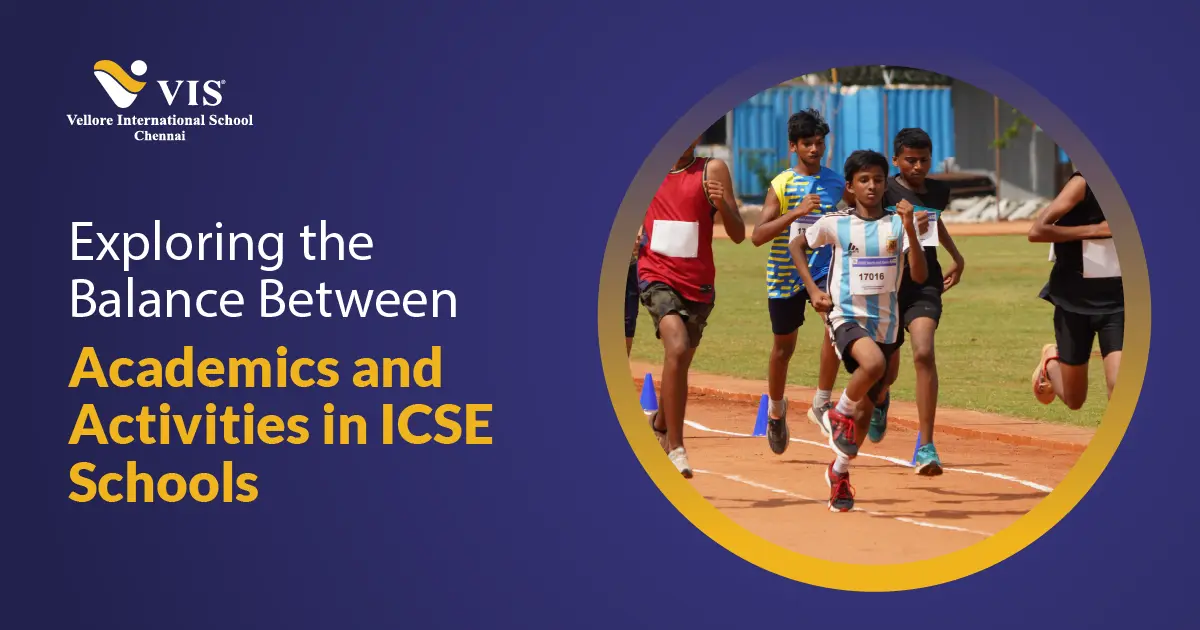
Without a doubt, sports and physical education play a huge role in the overall well-being of a student. They’re not just needed to ensure students stay fit, but team events also teach building trust, collaboration, and leadership. Thus, leadership and team building in ISC schools can be achieved via sports.
Social Responsibility in ISC Schools
Social responsibility goes beyond just learning how to work in a team. As a leader, a student must understand that they need to think positively and wisely about the team. Just achieving the objectives isn’t enough. It’s also about thinking about the well-being of every member of the team, the direction in which they are moving, and the process and techniques that they employ to achieve their goals.
As adults, students are going to live and work in a society where they will face the responsibility of being smart citizens, knowing how to live ethically, and making moral decisions in and beyond workplaces. Being a responsible part of society and developing civic sense is also just as important when learning how to thrive as an adult. Learning all these aspects of social responsibility begins at school. ISC school and curriculum develop these through sports, group projects, events, competitions, clubs, and so much more.
Strive Towards Overall Development With Vellore International School Chennai
At VIS Chennai, students can learn with the best curriculum and activities. Here, leadership in ISC schools goes beyond the classroom and enables them to learn, grow and keep working on themselves. Starting from a robust foundation and a holistic approach, we ensure that social skills are not just an extra subject but a complete integration of cooperation and team building in ISC schools.
Students have the freedom to ask questions, present ideas, analyse problems, learn time management and prioritisation, and explore everyday skills that will help them in the real world.
Learn about Life Skills Every VIS Student Learns Before Graduation here.
Final Thoughts
Leadership and social responsibility are the two aspects that cannot be shirked as an adult. Whether it’s working in a corporate environment, running a business, or simply managing a household, it’s essential to learn how to work with people, make smart decisions, and be a responsible citizen of society. And the education of all these also starts at school. The ISC curriculum at VIS Chennai is designed to provide a robust foundation and encourage students to develop these skills through sports, group projects, student elections, interhouse competitions, and a wide range of subjects. Thus, leadership and team building in ISC schools are strong areas of focus that contribute to the students’ all-around development.
FAQs
Q1. What is team leadership in schools?
Ans: Team leadership in ISC schools is encouraged and taught through group projects, team events, and sports. The idea is to teach students how to collaborate efficiently, share a certain set of goals, have mutual accountability and learn how to lead positively.
Q2. How does social responsibility in schools work?
Ans: Social responsibility in ISC schools involves integrating ethics, morals, empathy, civic sense and community service with students’ academic and extracurricular development. Students are taught and encouraged to conduct themselves with compassion and integrity.
Q3. What are the 4 types of social responsibility?
Ans: The 4 major types of social responsibility include economic, legal, ethical and philanthropic.
Q4. How to show social responsibility in school?
Ans: Social responsibility at school can be imbibed and demonstrated through community events, participation in competitions, team-building situations, and beyond-the-classroom social activities.
Q5. What is the most important part of team building?Ans: The most important part of team building is communication. Thus, team building in ISC schools focuses on teaching students how to communicate responsibly, effectively and with a purpose.